Cultural Arts Park
Heat cameras find people in the dark, and the shade canopies answer.
- Client
- City of Fresno
- Partners
- O'Dell Engineering, engineer
USA Shade, shade structures
Visible (LightAct), tracking and media server
Anticlockwise Arts, generative content - Our role
- Lighting design-build
- The software
- Heat cameras find people after dark; generative patterns seeded by where they stand gather the light around them. More on our software
- Today
- Ten years on an astronomical schedule. We still look after it, with maintenance in 2025 and a revised manual in 2026.
- 15
- Thermal cameras
01 · The idea
Shade by day, light by night
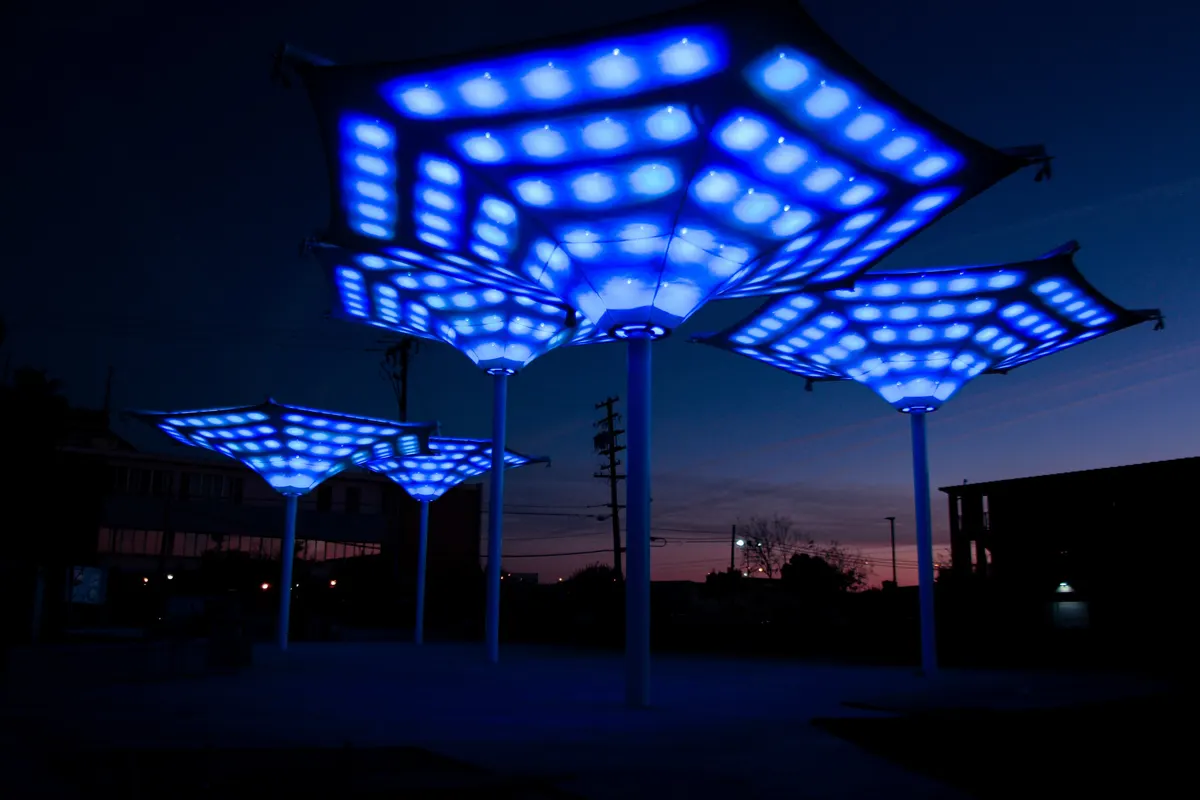
Giant fabric cones over a new park in Fresno's Cultural Arts District keep off the Central Valley sun by day. At night they light up for the people walking beneath them.
O'Dell Engineering, the park's engineer, asked us early in 2014 to develop an interactive lighting system for it. We spent six months on the idea. Ordinary cameras struggle in the dark, so we chose heat: thermal cameras over the park pick out every person, and their positions drive generative light in the canopies above them.
02 · The present
A river and butterflies
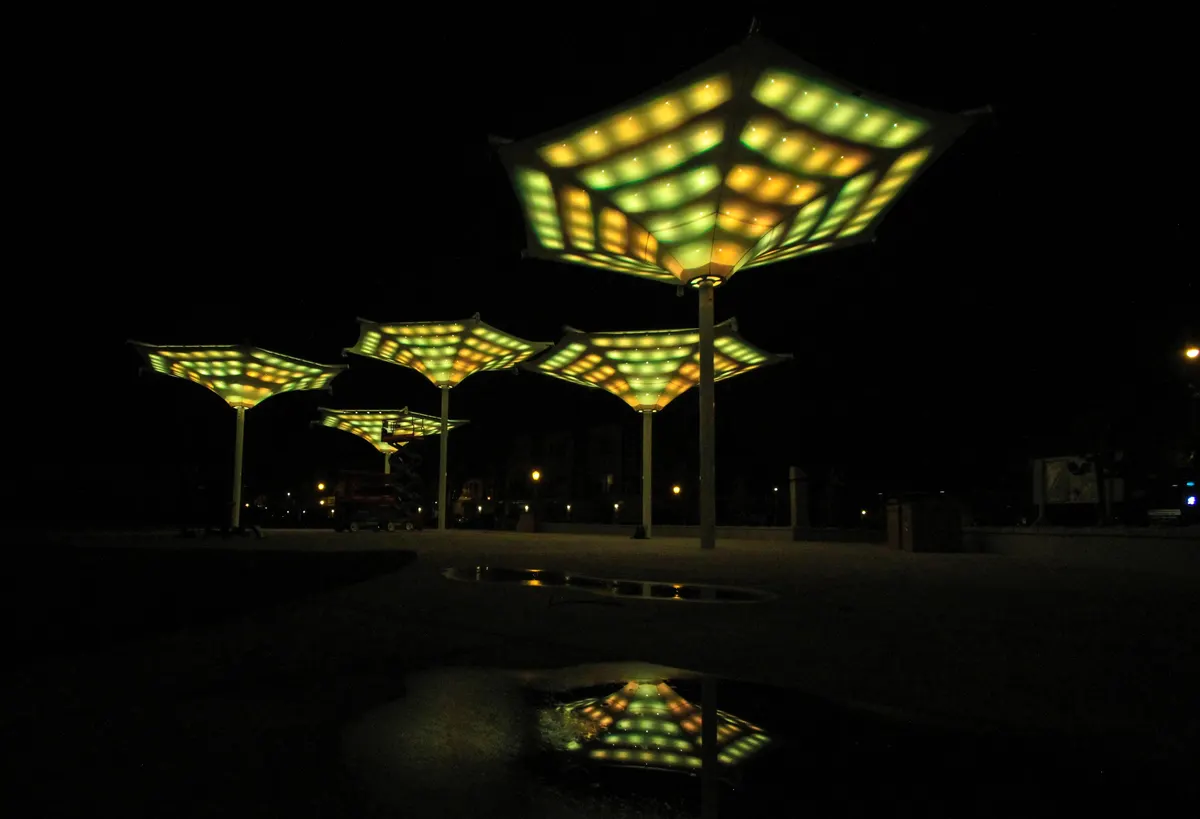
Anticlockwise Arts wrote the patterns: a river, and the yellow butterflies native to Fresno, seeded by where people stand, so the light gathers around whoever is beneath it. A second, audio-reactive mode runs in Madrix for events, switched on by an operator.
03 · How it's built
How it's built
Tested in a virtual park
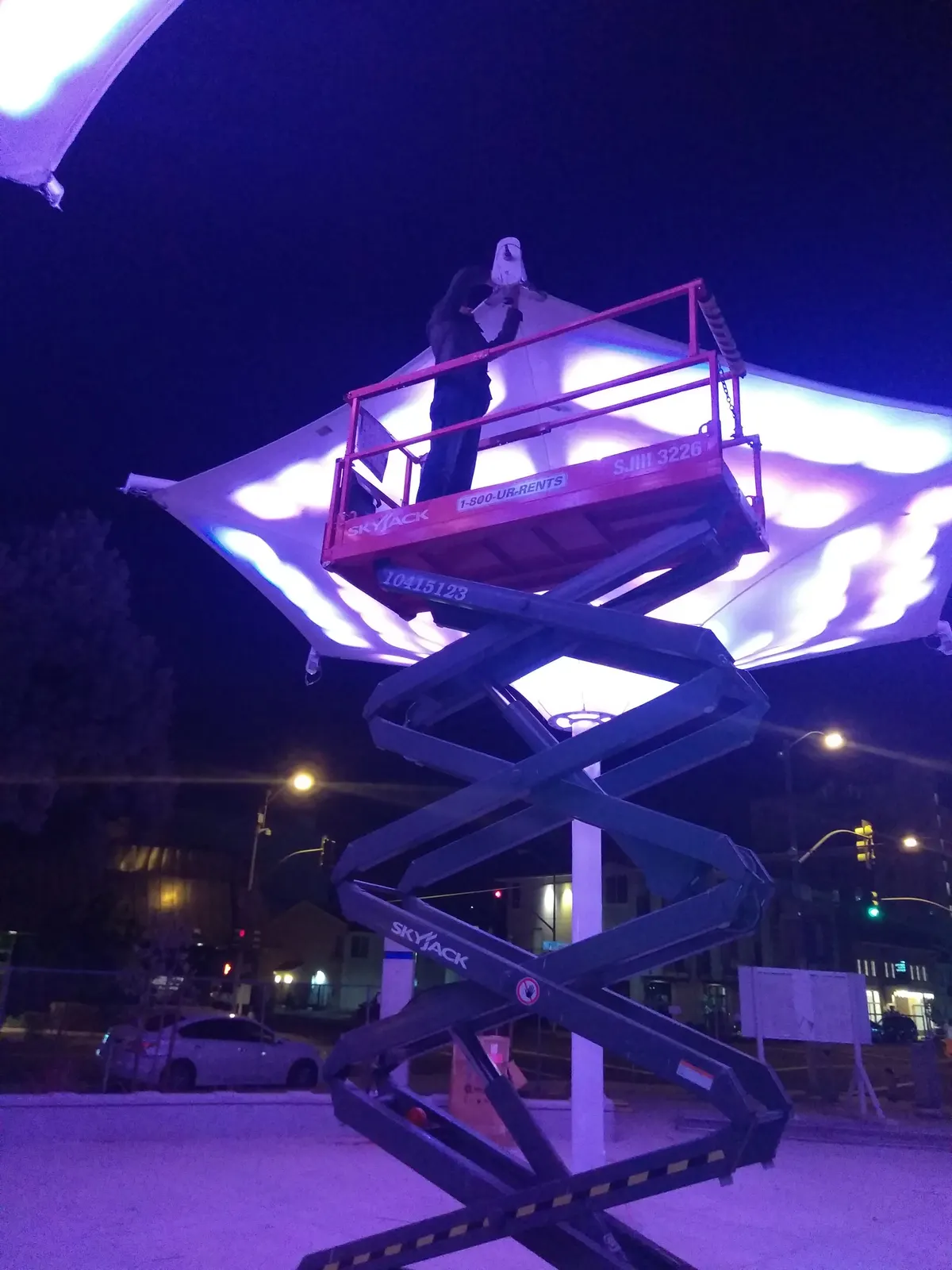
A year and a half of full design, the bid and work with the general contractor followed, through to installation. Before a single fixture went up, we tried the patterns on people in a virtual park, built in Unity and walked in VR. We installed and programmed the park at night in November 2016. It was our first public art commission for a city.
Light for the underside of the fabric
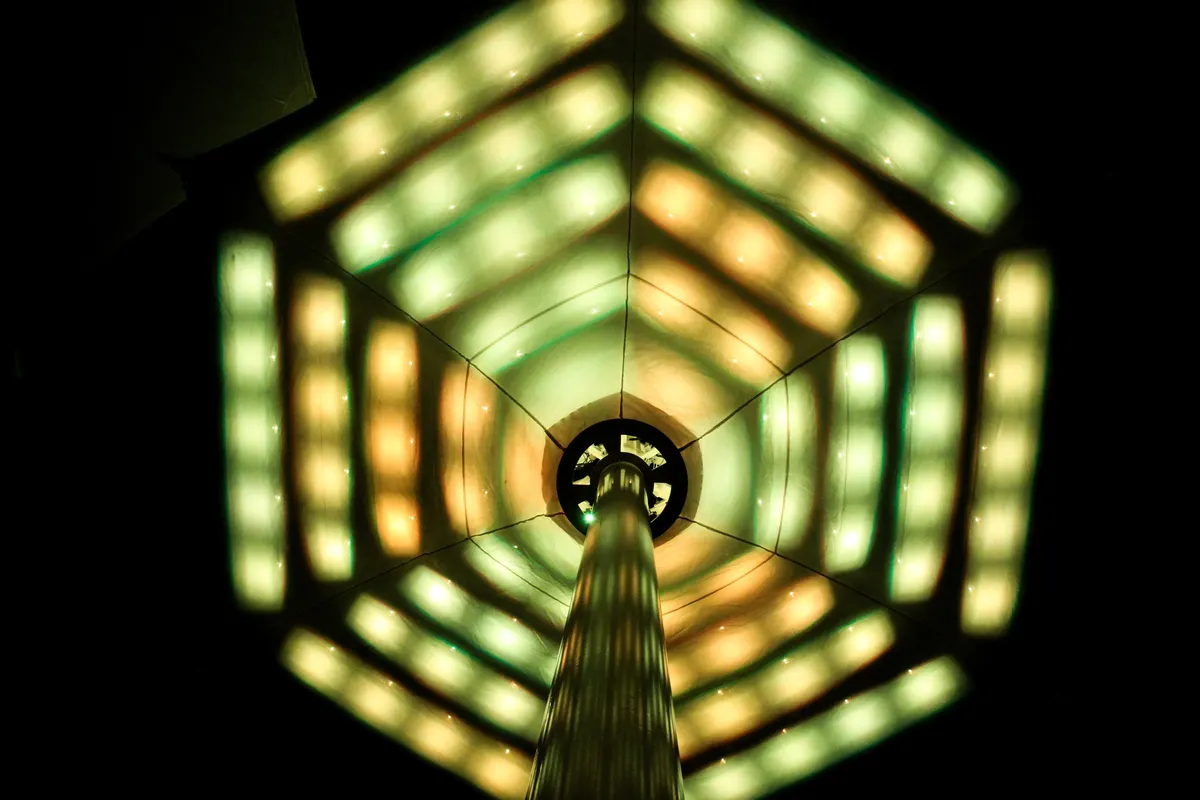
USA Shade made the cones; we made the light for their underside. Our PixelWash is a 10 W fixture with a wide 120 degree beam, so the fabric glows evenly from below, each one addressed over three DMX channels. The fixtures run in wedges around each cone, every wedge on its own power supply, and each canopy has its own DMX node.
Three thermal cameras look down from each canopy. A PoE switch in every canopy feeds its cameras and its node, with home runs to a rack switch on a UPS. Visible wrote a custom tracking algorithm in its LightAct media server that reads all the camera feeds at once and follows everyone in the park.
04 · Credits and operation
Ten years on
The park runs on an astronomical schedule and recovers on its own after a power cut. Ten years on we still look after it: we carried out maintenance work in 2025, and the operating manual was revised in 2026.
- Pixel washes
- Custom 10 W, DMX
- Installed
- November 2016
- Client
- City of Fresno
- Engineer
- O'Dell Engineering
- Shade structures
- USA Shade
- Tracking and media server
- Visible (LightAct)
- Generative content
- Anticlockwise Arts
- Lighting design-build
- Digital Ambiance