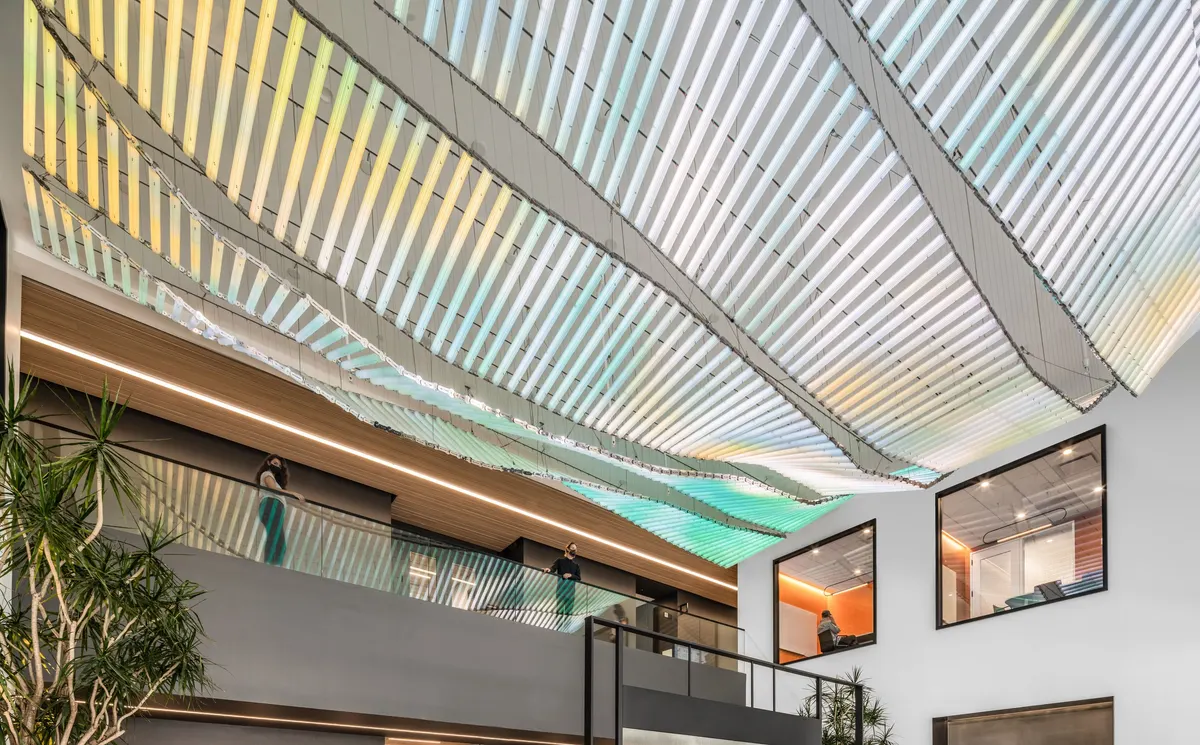
Luminescent Canopy
Every glass tube is lit from inside, so the chandelier can also play video.
- Client
- Uber
- Partners
- Studio Palanquin, creative direction, glass, structure and content
Gensler, architecture
Smode, programming - Our role
- Electrical engineering and custom LED
- The software
- Smode maps the content onto every tube, and Uber books what plays through a calendar. More on our software
- Today
- Still in our care, with a yearly Lightpath OS license for scheduling what plays.
- 345
- Glass tubes
- 1,200
- Square feet of ceiling
01 · The idea
A wave of glass
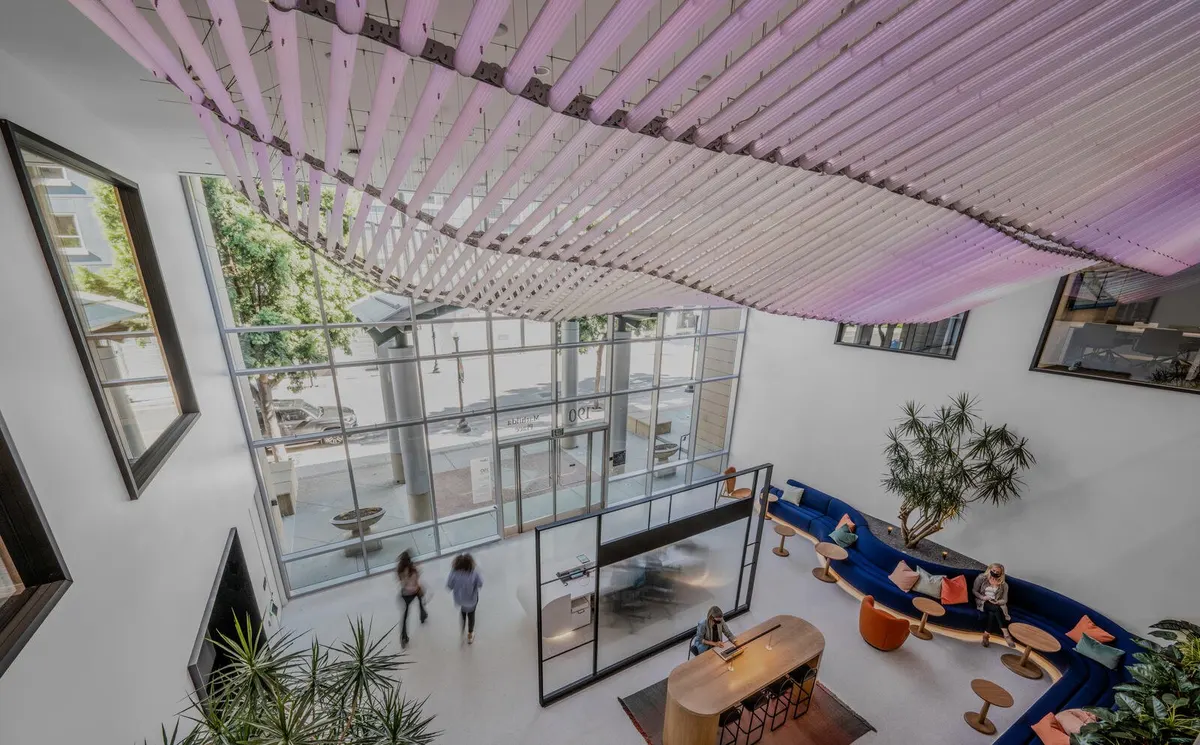
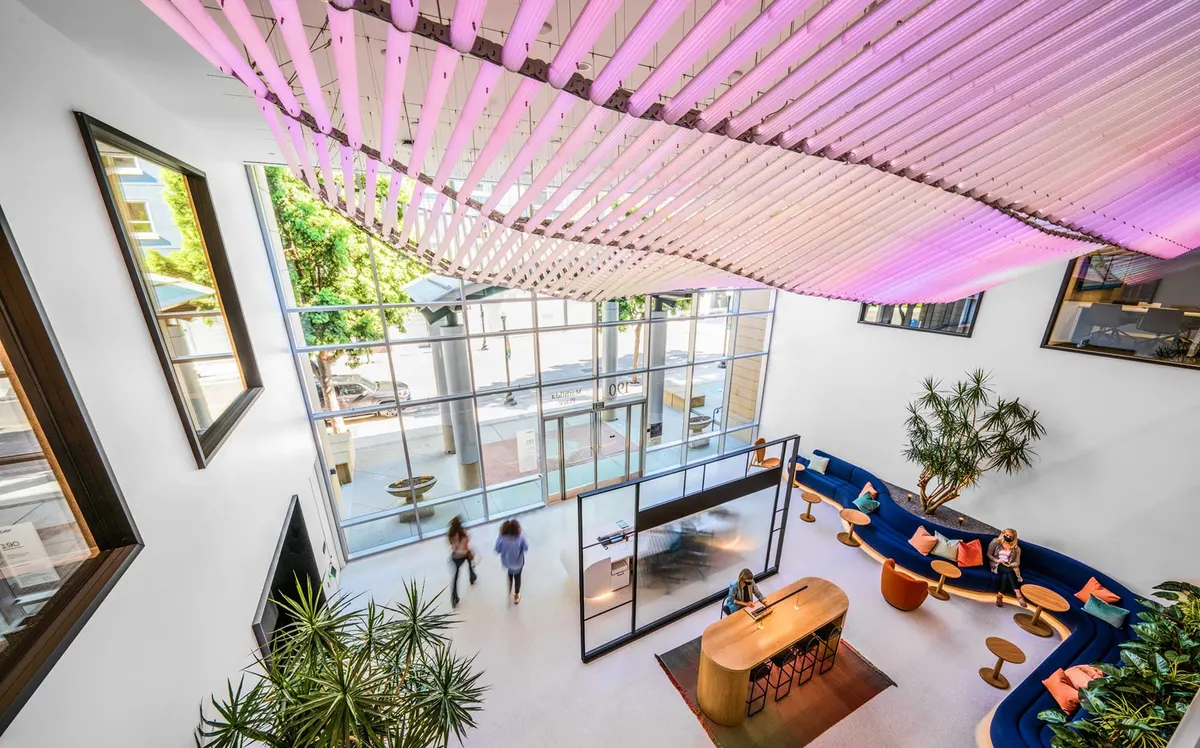
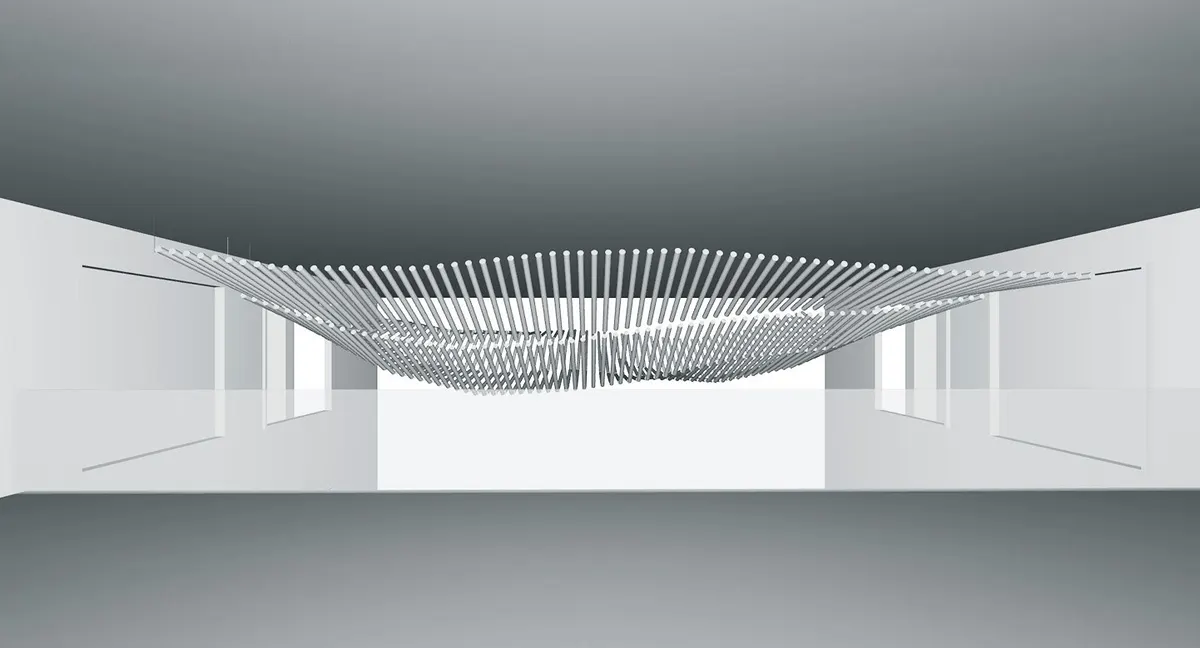
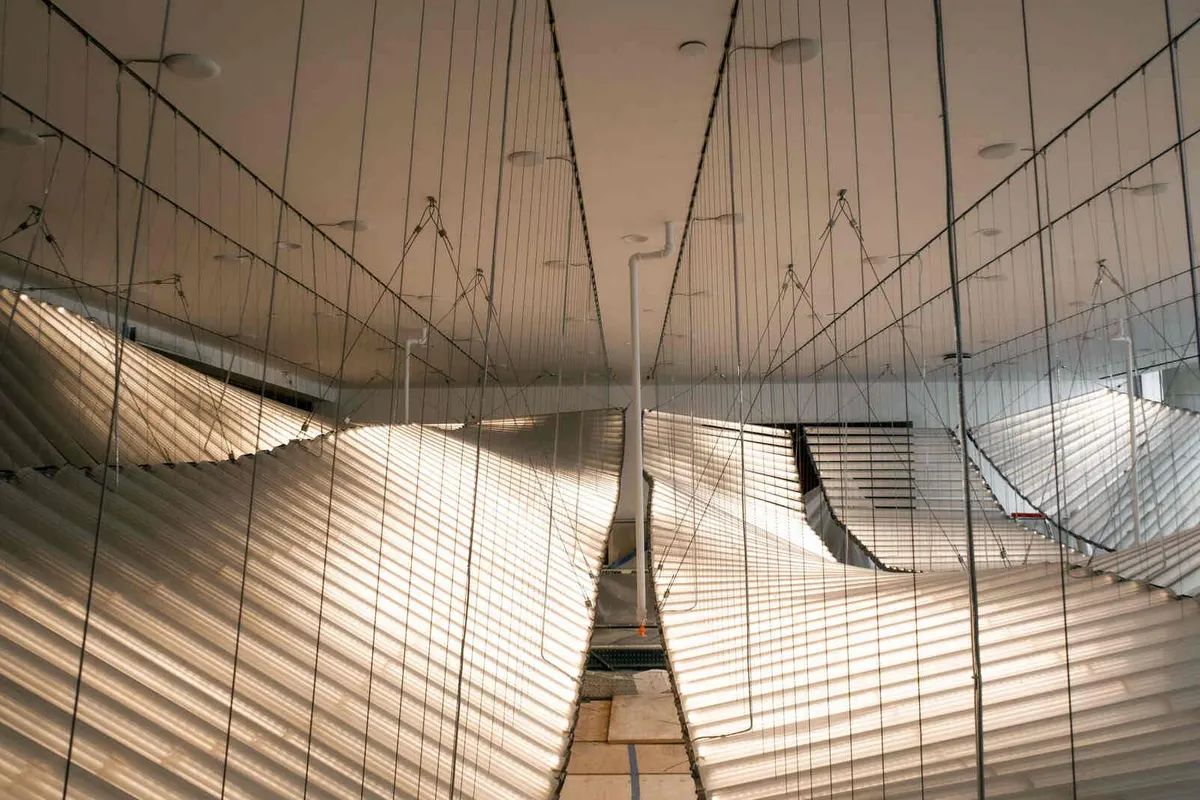
An undulating wave of glass hung over Uber's lobby, every row on its own curve. It can glow warm, like a chandelier; when it plays, it moves like water and daylight. People cross beneath a ceiling that is a light first and a screen second.
The lobby is Uber's office in Sunnyvale, designed by Gensler. Studio Palanquin brought us in to help design and engineer the ceiling; the wave is Alexander MacDonald's idea. Our part was the light: making it come from inside each tube, so the glass itself glows, with no fixture in sight. It had to be addressable as well as warm, and every rod a custom fixture that would pass UL.
02 · The present
Water and daylight
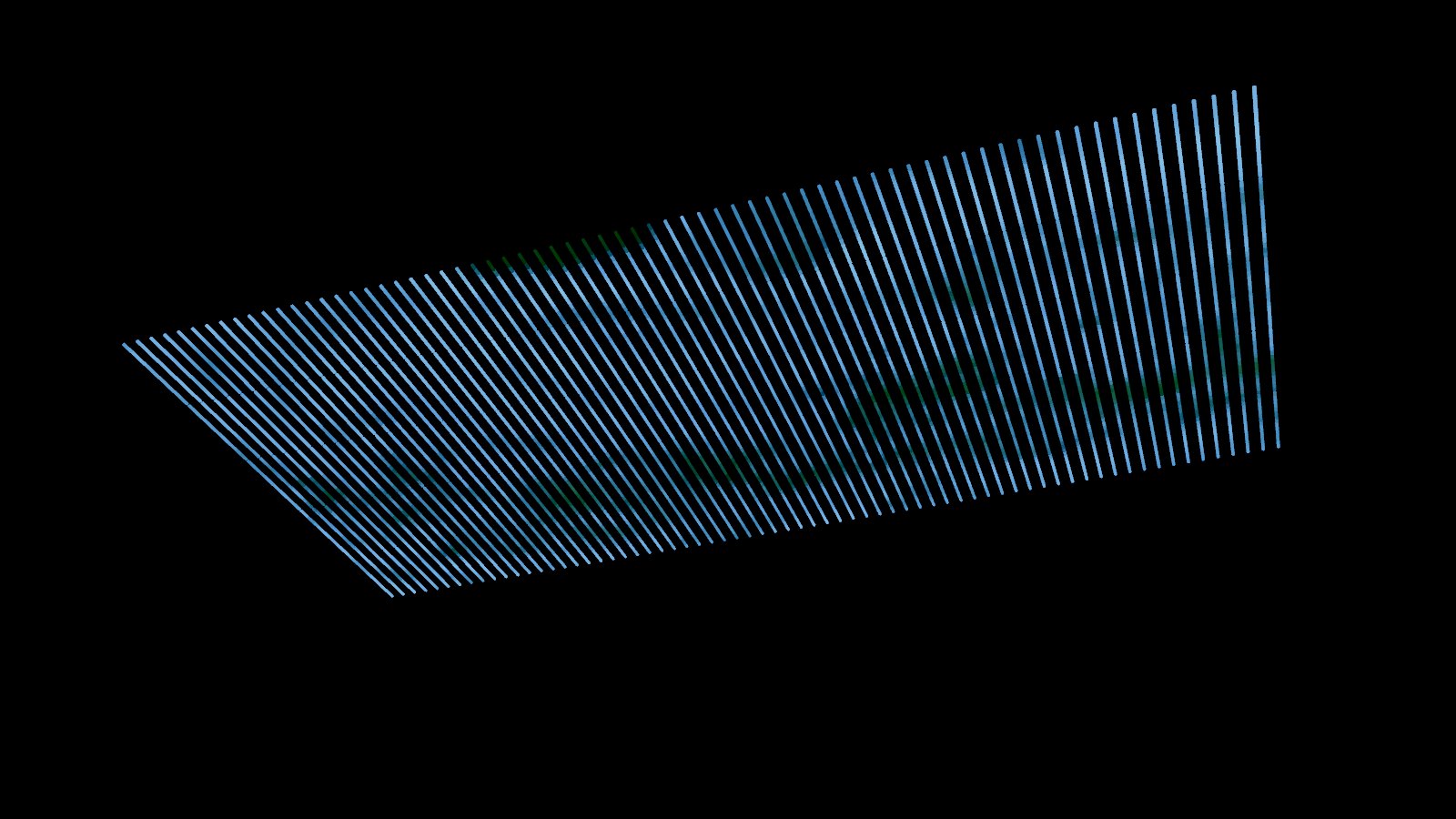
Studio Palanquin made the content: ocean waves and light through a forest. We mapped it onto the tubes in Smode, so the ceiling plays as a low-resolution video display. Uber books what plays through a calendar.
03 · How it's built
How it's built
Palanquin's shop to the lobby
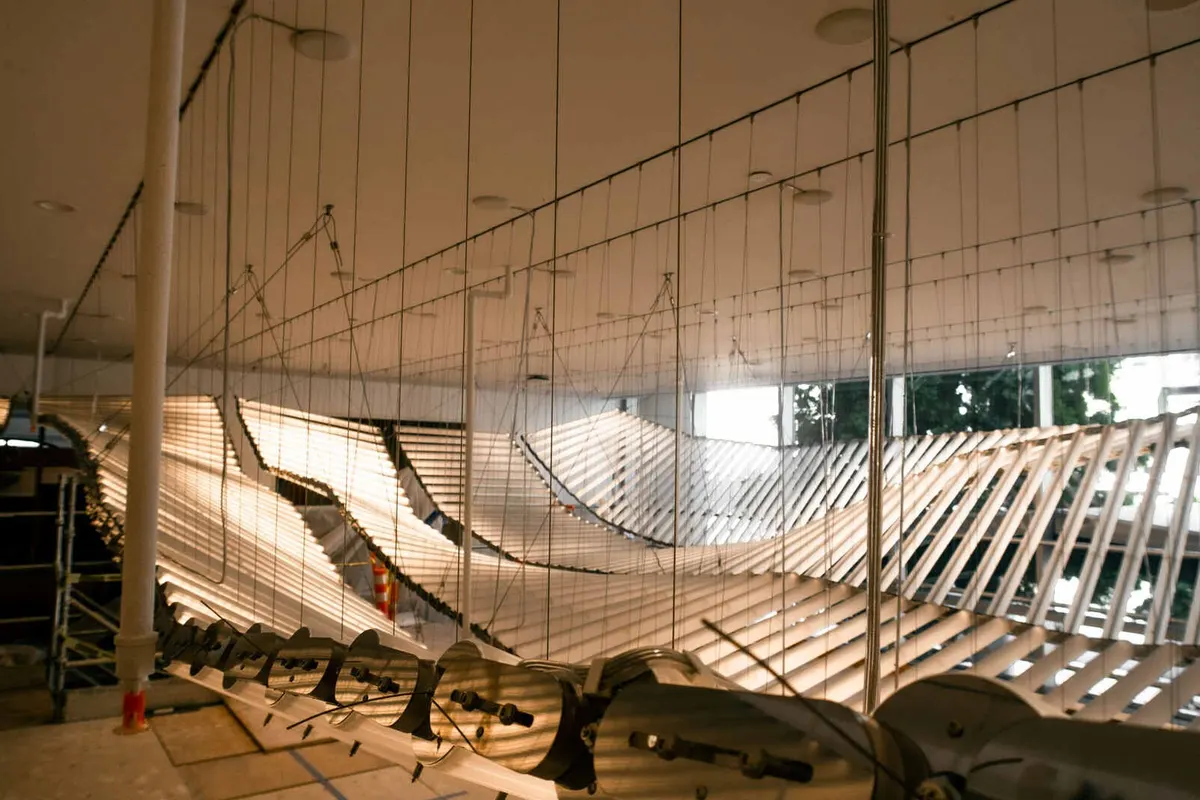
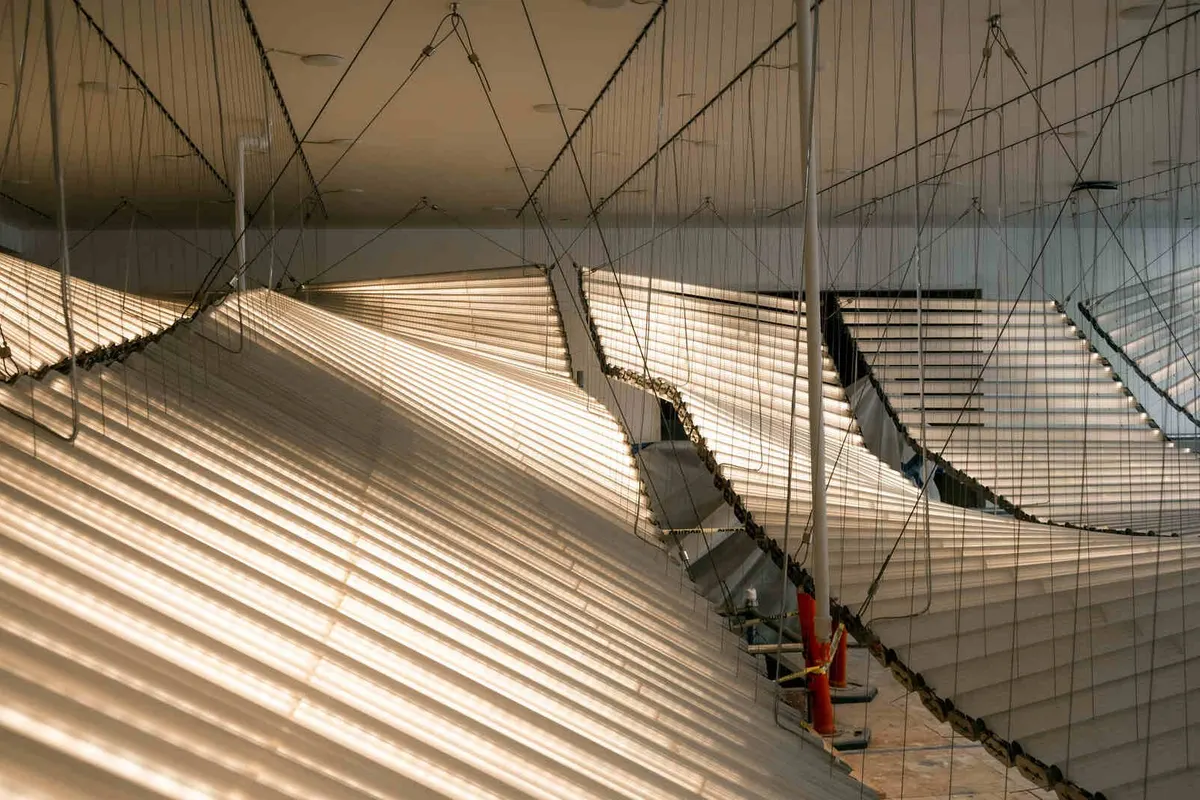
Studio Palanquin assembled the glass and grid in its shop, where the rows hung on cables and were lit for testing. The schedule was redrawn in the spring of 2020 as the shutdowns hit. On site, Palanquin's riggers hung the tubes on hanger chain while we wired the control electronics into the ceiling.
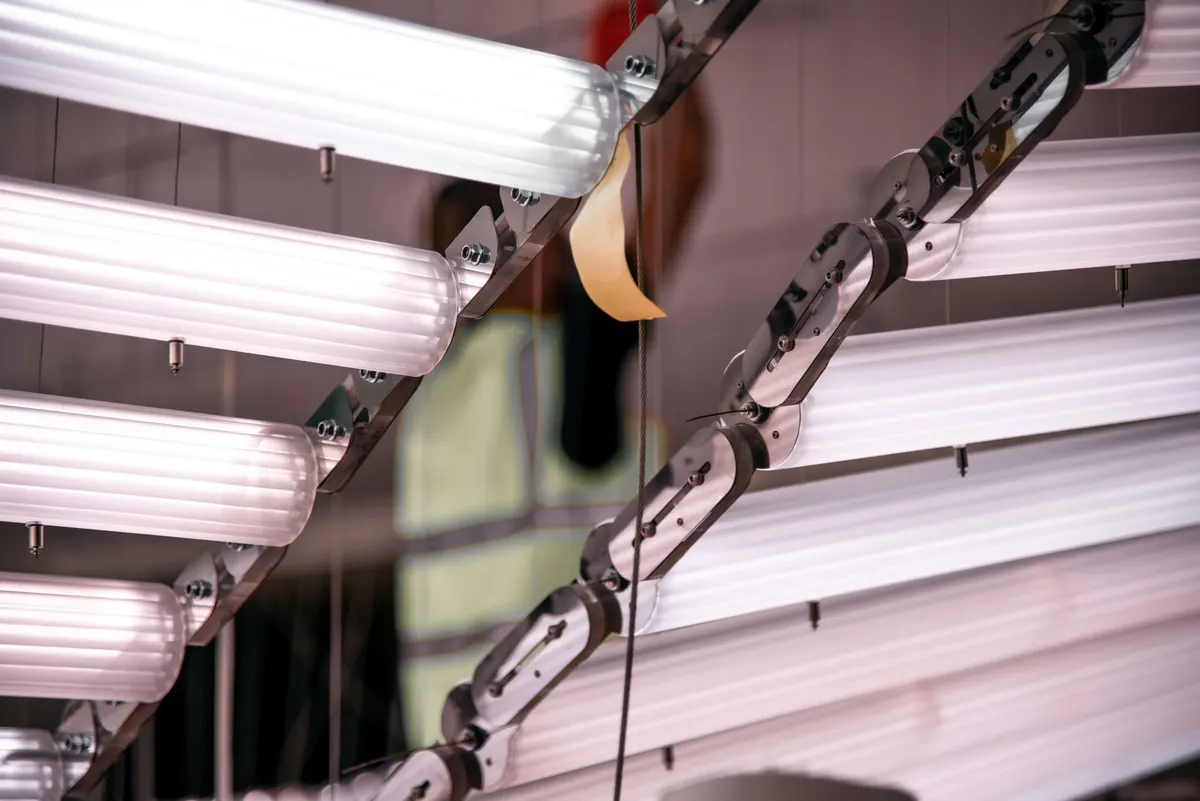
A custom rod, built by hand
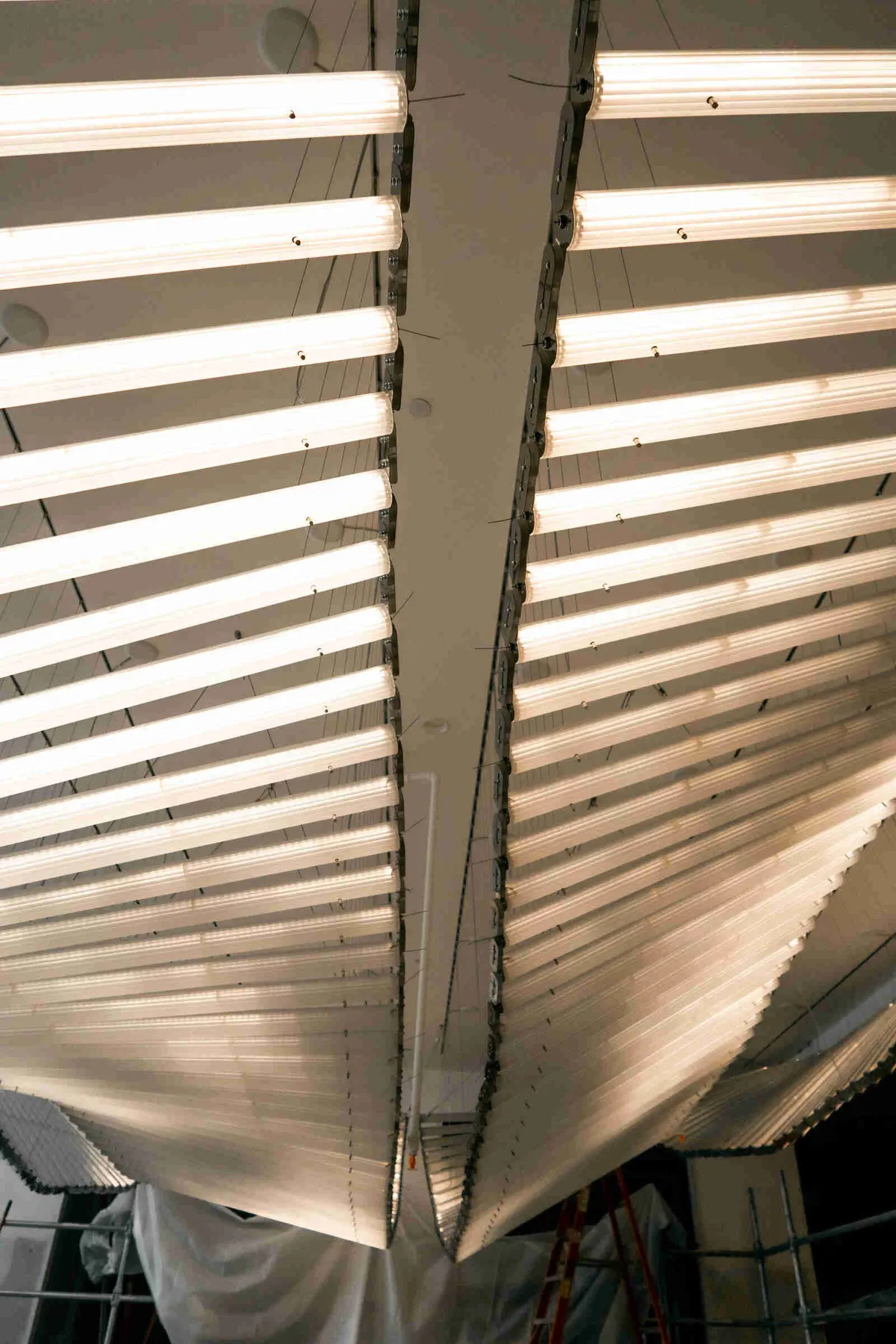
We sourced small-batch addressable RGBW pixels: with a white emitter in every pixel, the ceiling can hold a true warm glow and still play color. The rod went through three versions, from two LED pucks a bar to a sparse strip to the final dense 24 V strip run the full length of the bar, so the glass reads as one even line of light.
Every rod was assembled and tested by hand to meet UL's limits on heat and power draw, and the ceiling was field-evaluated by UL on site. One power supply serves each row of five bars. Data runs over Cat6 from the control rack to receivers and isolators in junction boxes along the rows, and two Advatek PixLite 16 controllers drive the bars from a Smode media server.
04 · Credits and operation
After opening
We still look after the canopy. In 2023 we designed a replacement repeater board for it. There have been repairs and new show content since, and it runs on a yearly Lightpath OS license for scheduling what plays.
- Pixels
- RGBW, 15 per bar
- Controllers
- 2 Advatek PixLite 16
- UL field evaluation
- July 2020
- Designed
- 2019
- Client
- Uber
- Architect
- Gensler, San Francisco
- Creative director and design lead
- Alexander MacDonald, Studio Palanquin
- Structure, fabrication, rigging and content
- Studio Palanquin
- Glass fabrication
- Studio Palanquin, Fablab MXC
- Producer
- Robb Pope, Digital Ambiance
- LED production, electrical engineering, mapping and UL listing
- Digital Ambiance
- Programming and software
- Vincent Le Moigne, Smode
- Photography
- Jason O'Rear