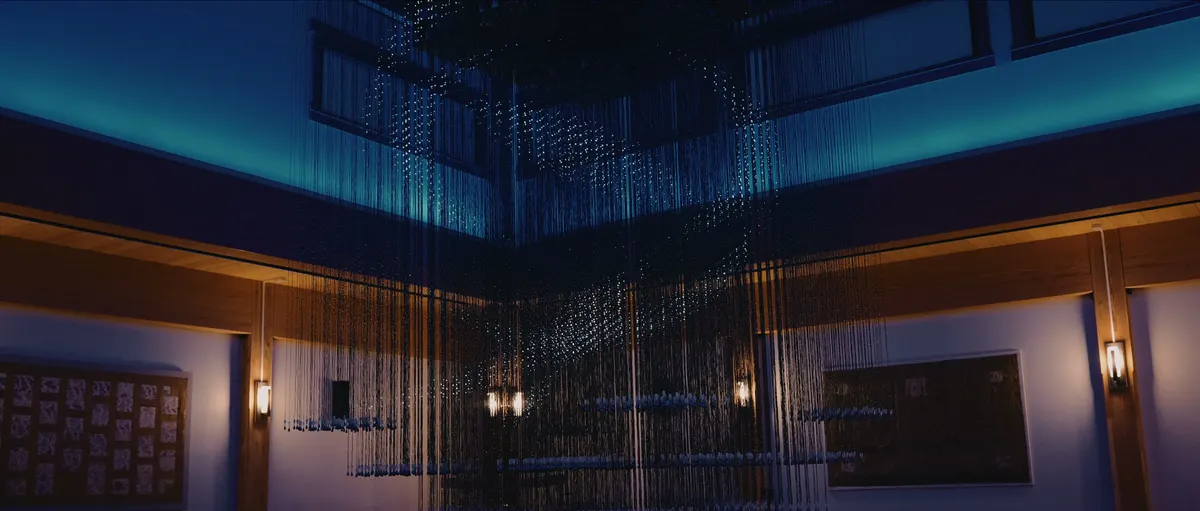
Luminosity
The therapist plays light and sound as one instrument, with a single control.
- Client
- Usona Institute
- Partners
- Promega, artistic direction and project lead
LED Pulse, volumetric modules
Threshold Acoustics, acoustics - Our role
- Design-build and content
- The software
- One tablet plays TouchDesigner and Max/MSP together. Move a point on the valence graph, and the light and music shift as one. More on our software
- Today
- In use since 2024, run by Usona's own staff with remote support from us.
- 2,500
- Strands of light
- 16
- Meyer speakers
01 · The idea
A sanctuary for the mind
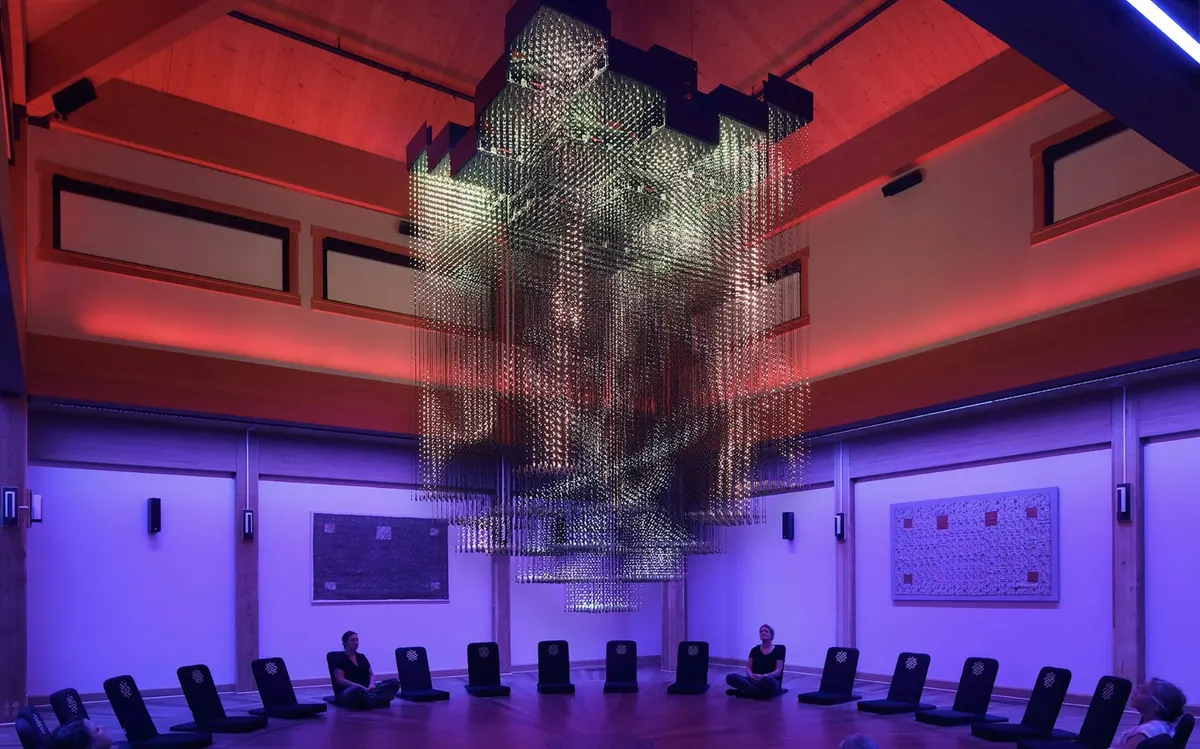
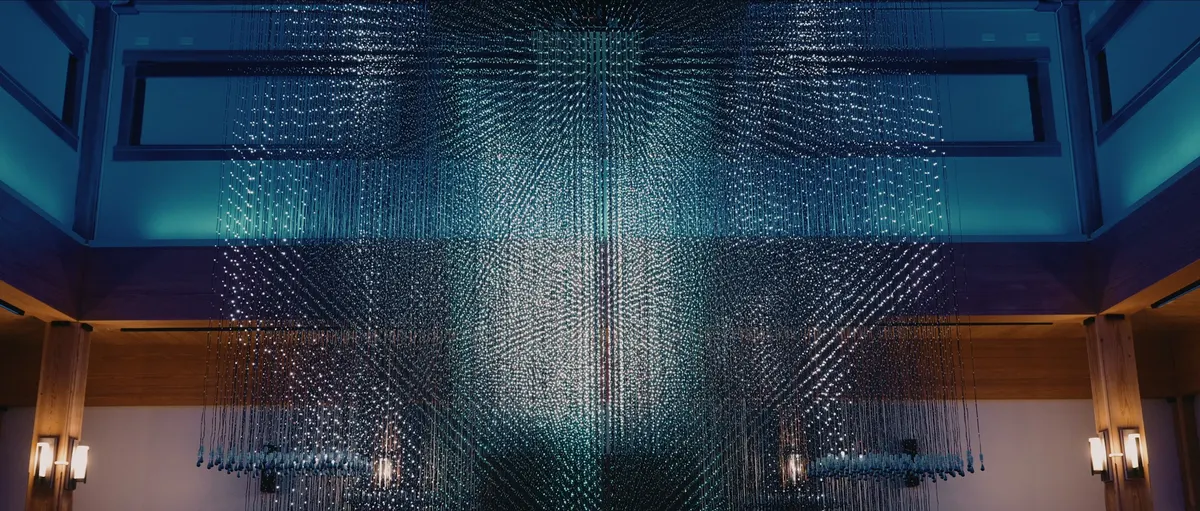
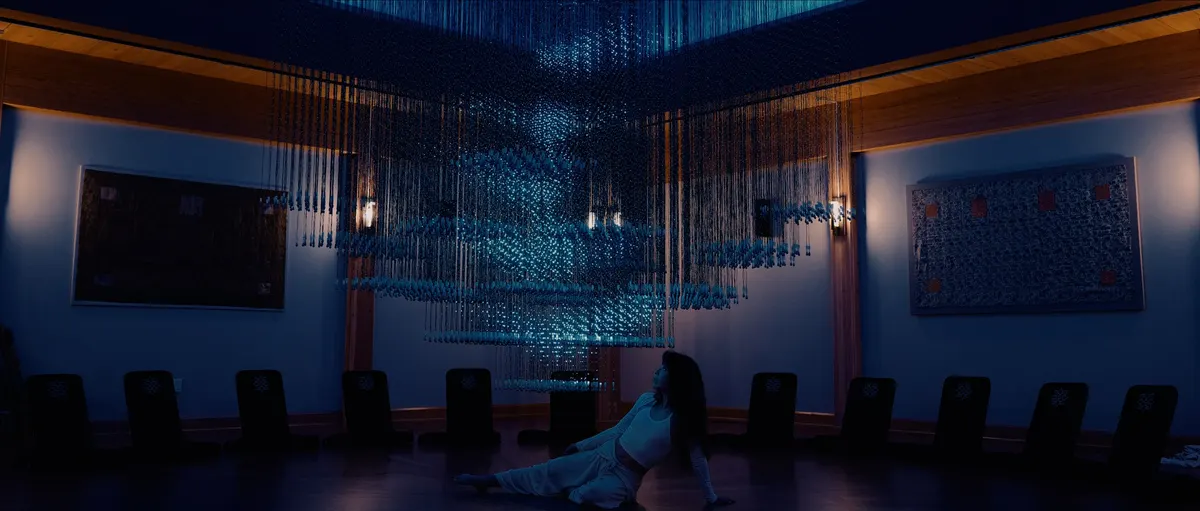
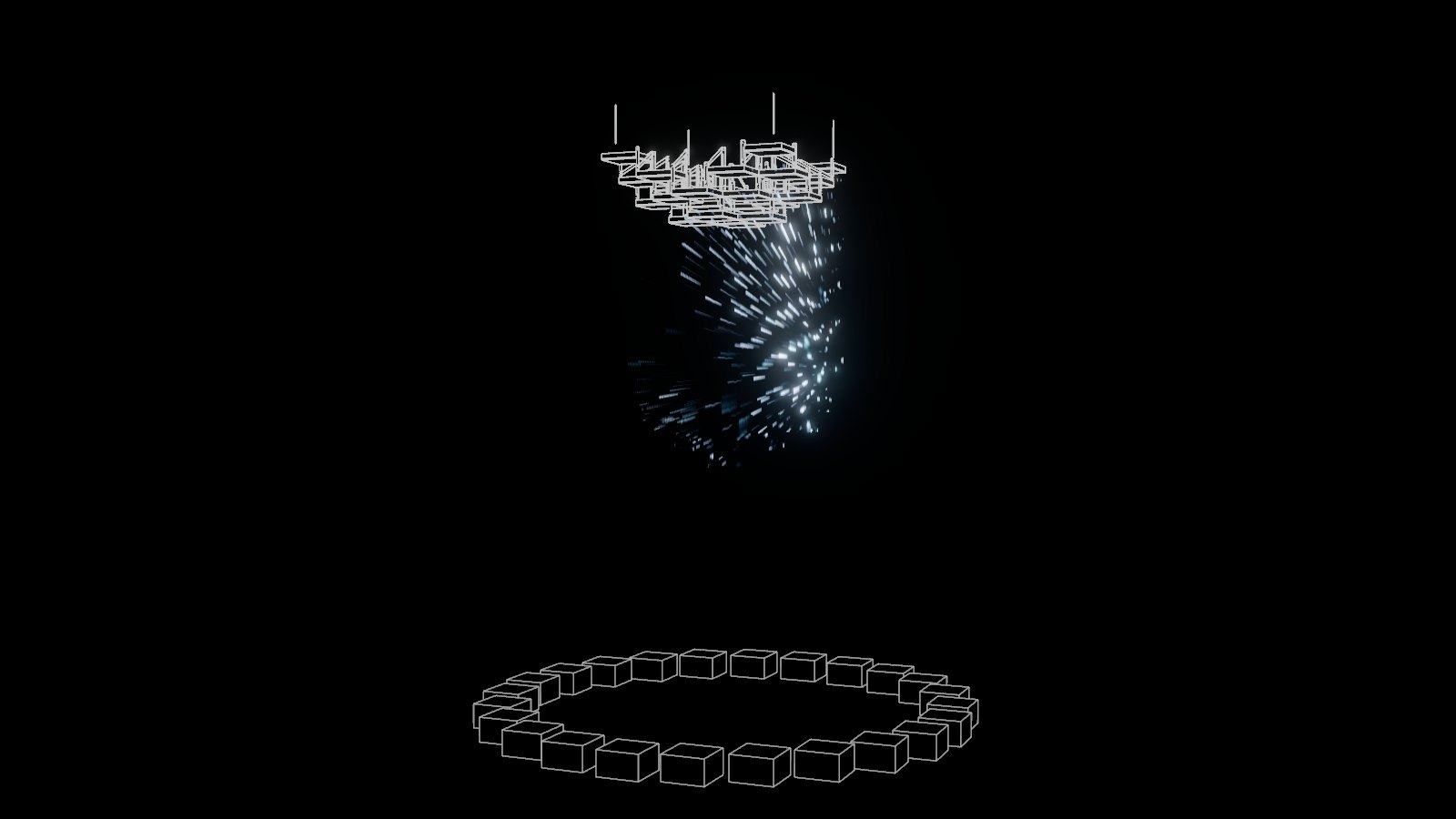
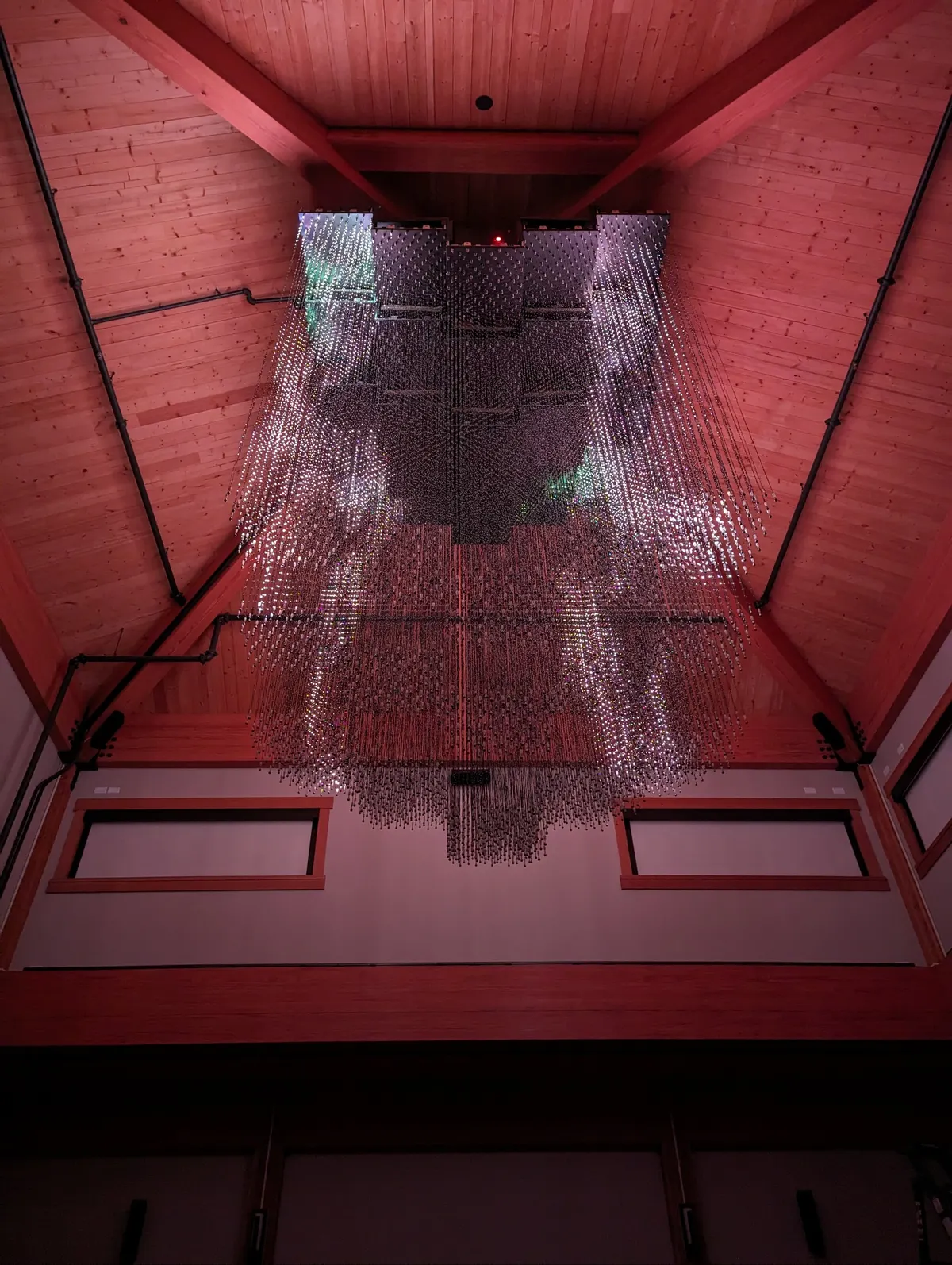
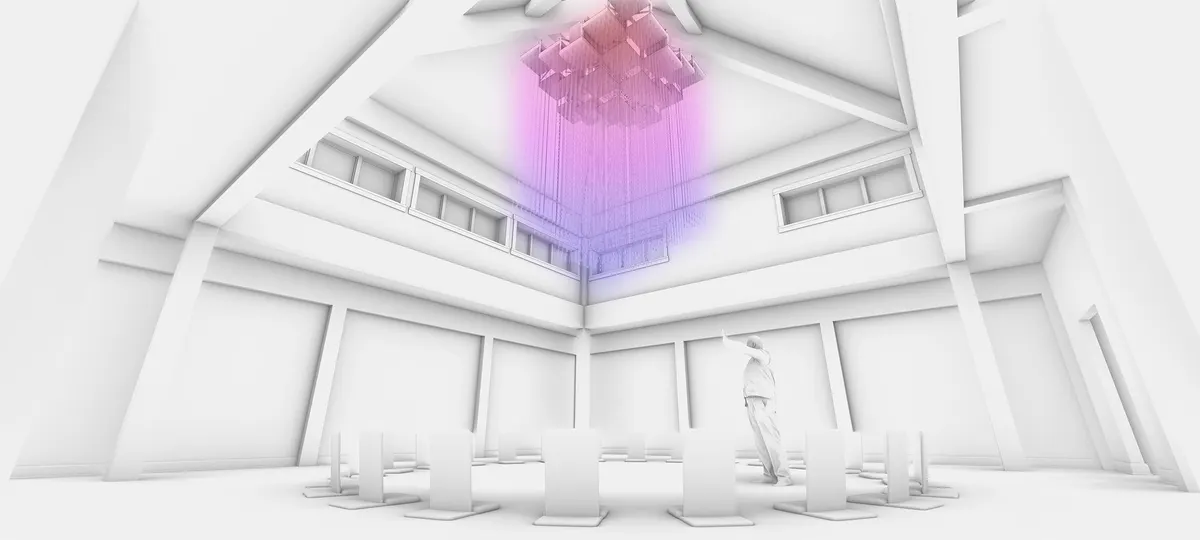
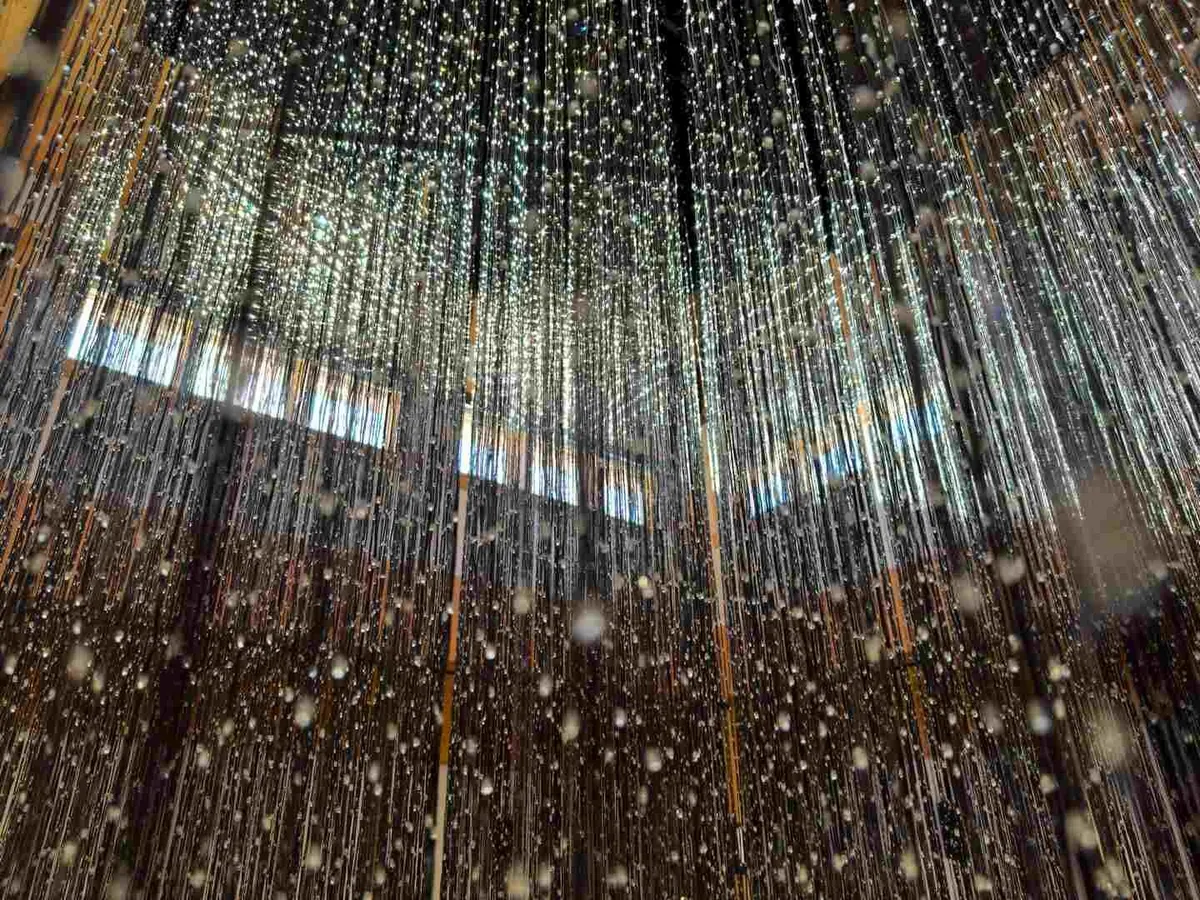
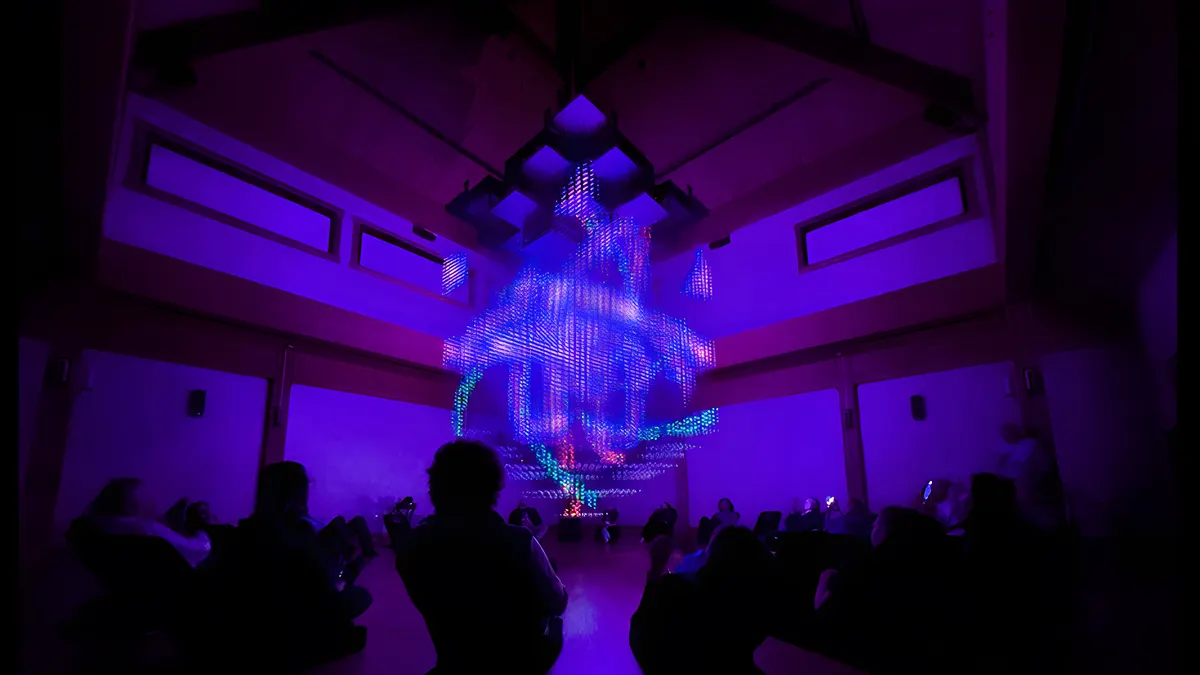
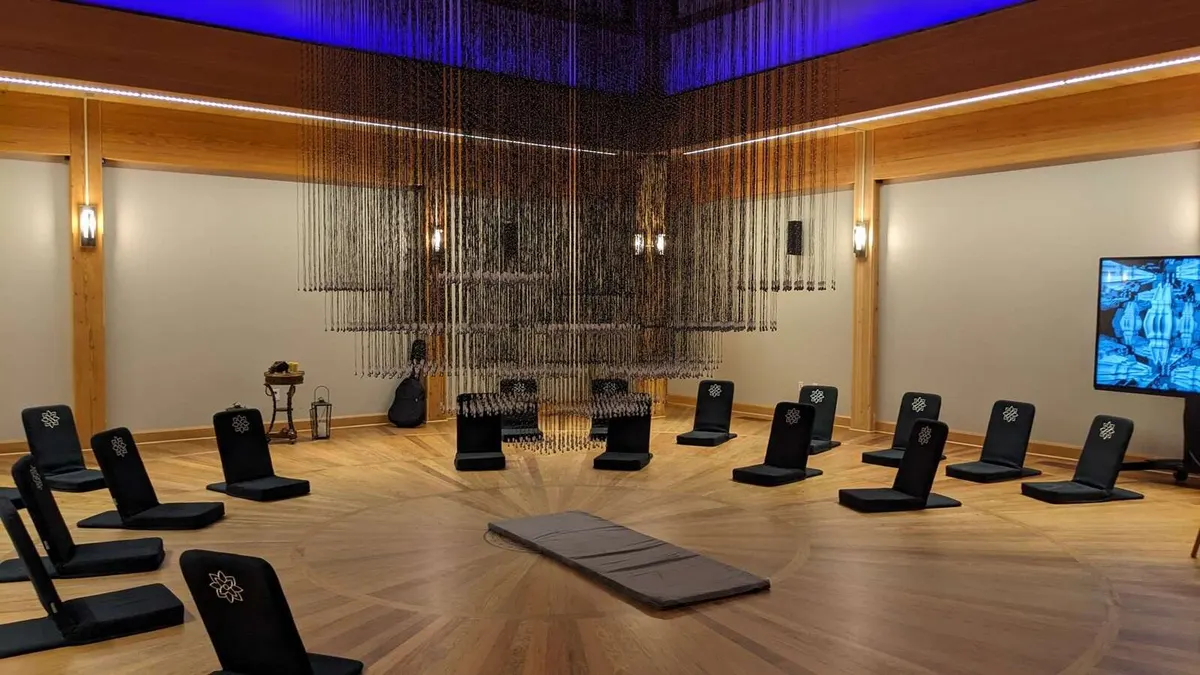
A hanging volume of light over a circle of people, stepped to follow the room's rising ceiling, with sound arriving from every height. The people beneath it sit inside the instrument.
It is a group therapy room on the Usona Institute's new campus in Fitchburg, just south of Madison. It began with a cold call from a lighting designer whose friend was building the center; we hosted the Usona team at our Berkeley studio, then interviewed dozens of therapists. A session can last for hours, and the controls have to disappear so the therapist stays with the people in the room. The research covered set and setting and the long history of light, sound and dance in therapy, with advisers including Jahan Khamsehzadeh.
02 · The present
The valence graph
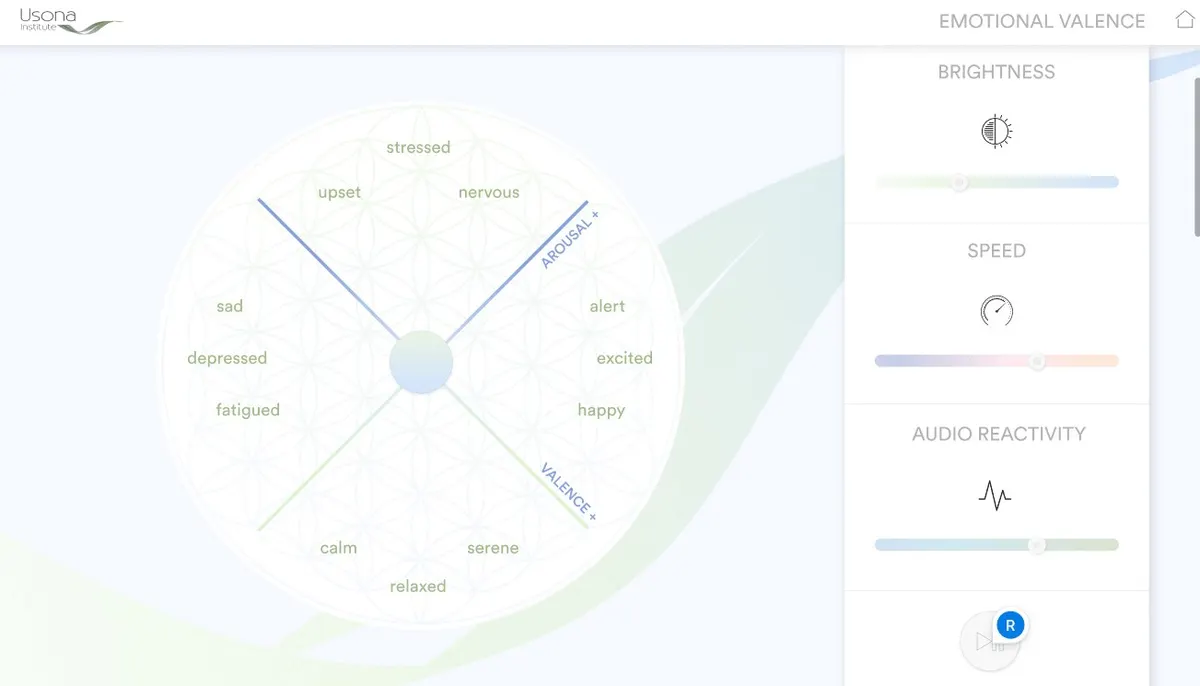
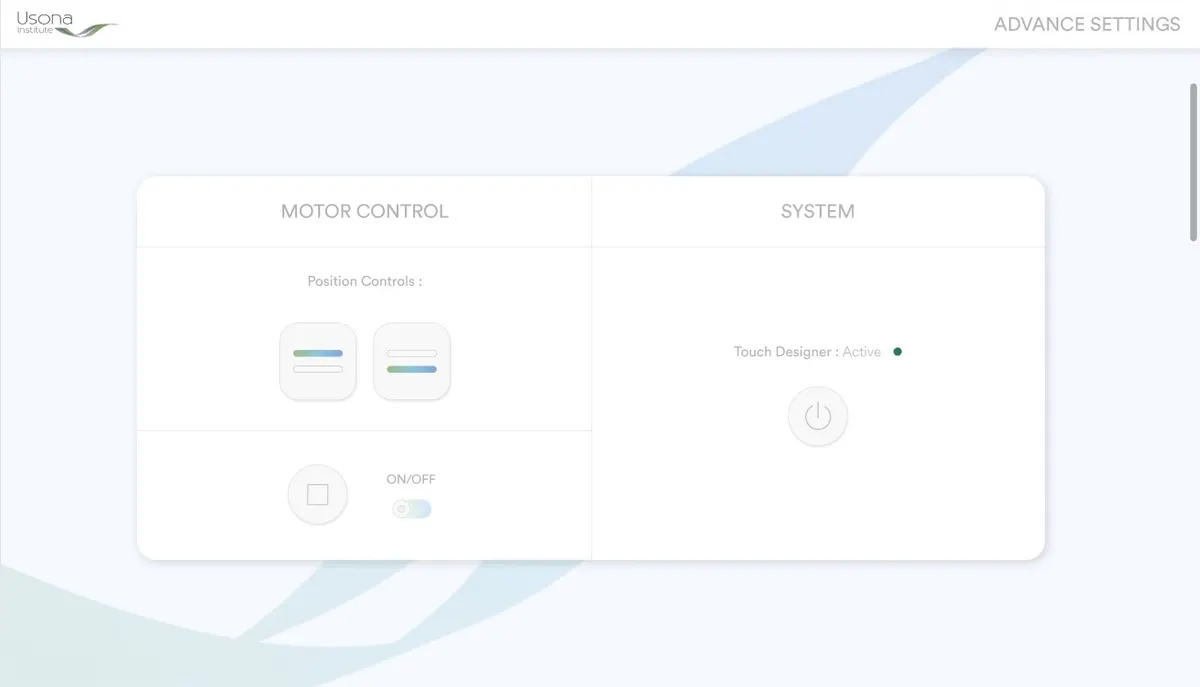
The control is an emotional valence graph on a wall tablet, designed with the therapists so they can tune the room to the emotional state of the people in it. Moving a point toward an emotion shifts the music and the light together, with no knobs, dials or extra apps. Other pages on the tablet choose the experience and look after the room, the audio and the winch.
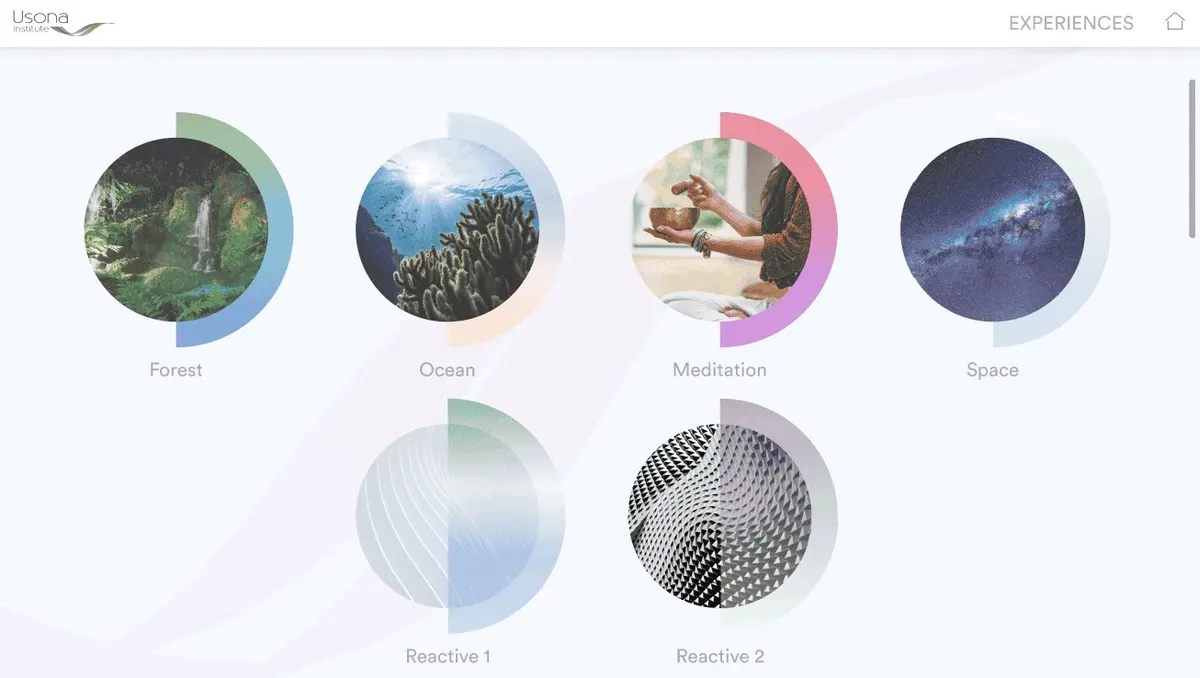
There are four journeys to choose from: Forest, Ocean, Meditation and Space. The visuals are by Tommy Etkin and Jason Ting with our team, and the music by Manne Skafvenstedt. The room also takes outside sound, so a musician or singer can perform live through it, and in its first spring a singer did.
Two screens from the wall tablet. On the left, the valence graph, with brightness, speed and audio reactivity beside it. On the right, the four journeys.
Try the tabletIllustrative
Pick a journey, then move the point. The light shifts with it, and the sound follows a few seconds later.
- Nearest
- calm
- Positivity
- 0.50
- Energy
- 0.50
- Sound
- In step
03 · How it's built
How it's built
Three trips
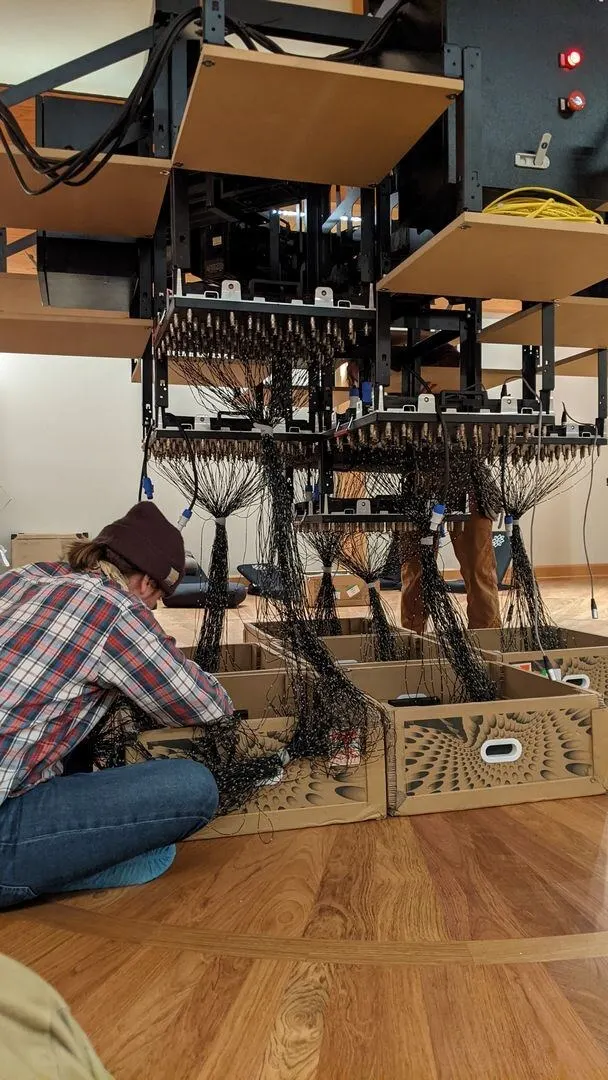
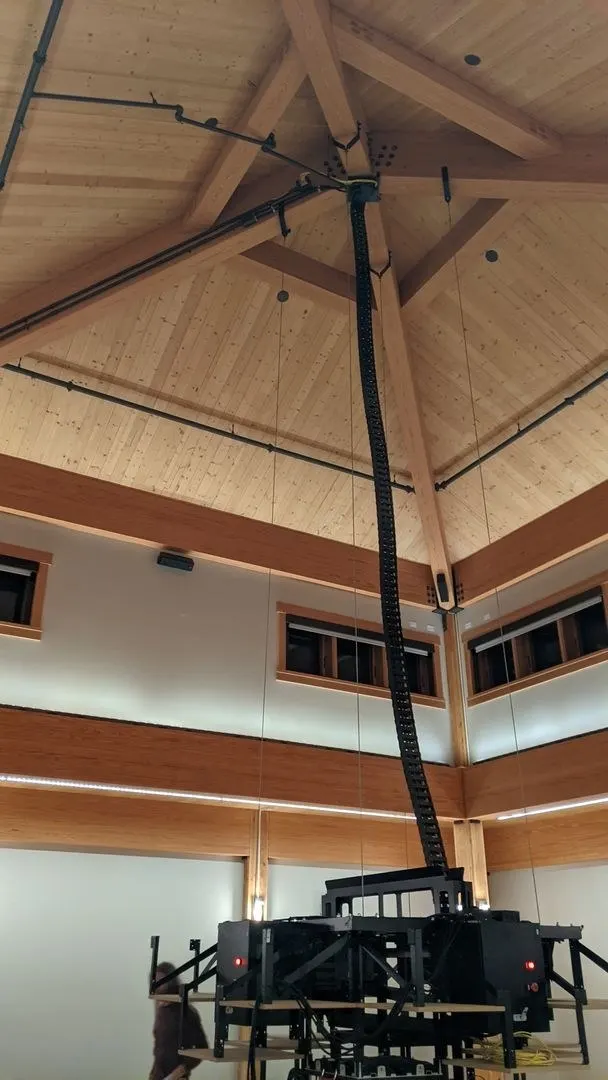
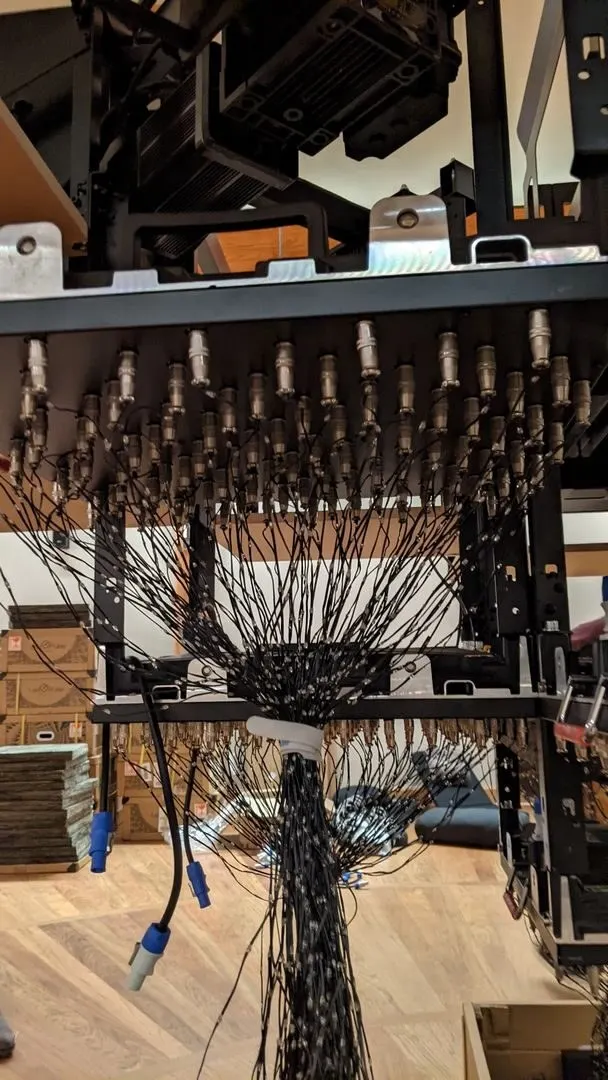
The installation took three trips: one to install, one to commission, and one to come back and see the results. On site the modules were unpacked and hung under the frame, and the strands dropped into place. Between trips the team programmed in the room, from the first light tests on.
Light that can be lowered, sound written for the room
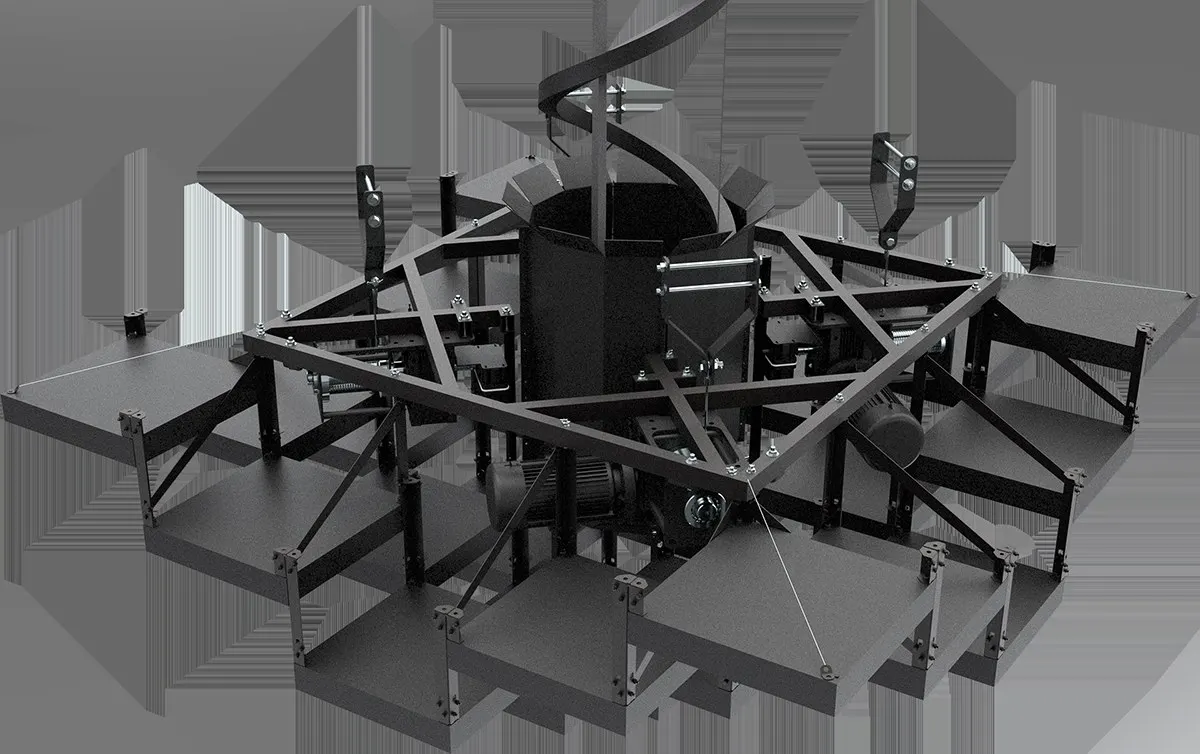
The light comes from LED Pulse's volumetric modules, hung in a square grid on a stepped frame. At the end of each strand, custom metal weights replace the stock clear plates, which gather dust and block light. Acoustic foam sits just above each module, so the room stays quiet when nothing plays. A four-point winch lowers the whole array for seated sessions and raises it for standing or dancing. Limit switches stop it at each end, and only trained staff move it.
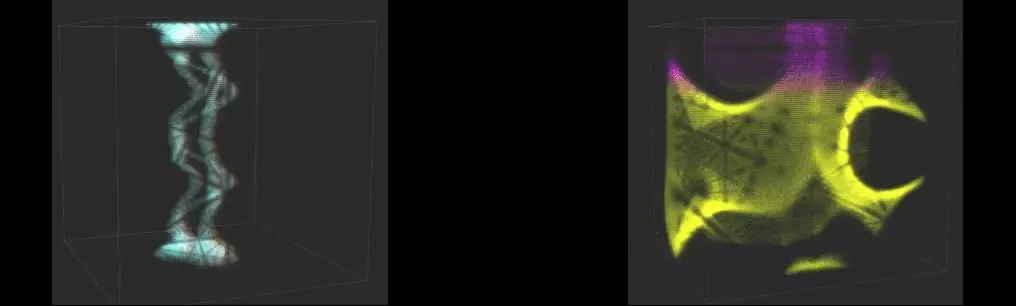
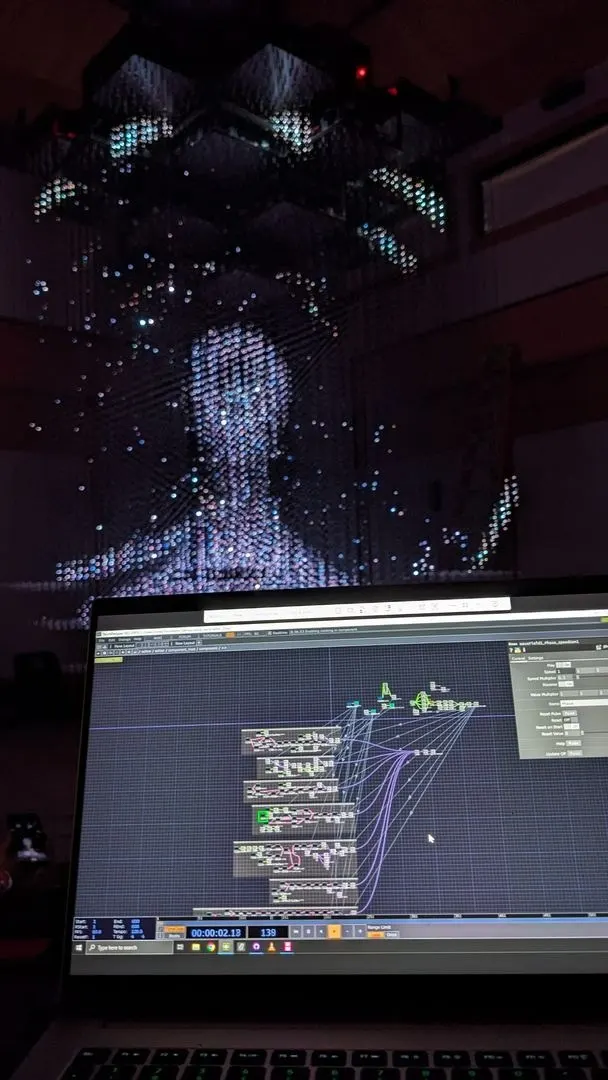
Meyer speakers ring the room at different heights. We wrote an ambisonic decoder for that exact layout and tuned it in the room. TouchDesigner drives the light, with pixel mapping built with LED Pulse for a stepped, three-dimensional array; Max/MSP makes the sound and places it in the space. One rack server runs the light, the sound and the controls.
04 · Credits and operation
In use
Usona's facilities and AV staff run the room, with an operations manual kept up to date, a shared calendar for sessions and maintenance, and remote support from us. Next, a visiting artist wants to play Luminosity as an instrument, and we have proposed an update that lets artists compose for it.
- LEDs
- 150,000
- Volumetric modules
- 25, by LED Pulse
- Array height
- 14 ft 4 in (4.37 m)
- Software
- TouchDesigner, Max/MSP
- Experiences
- 4
- Completed
- November 2023
- Client
- Usona Institute, with Promega
- Artistic direction
- David Rousseau (Promega), Robb Pope
- Project management and installation
- Nicholas Perillo
- Programming
- Tommy Etkin, Kendrick Feller, Dirk Roosen
- Visual artists
- Tommy Etkin, Kendrick Feller, Jason Ting
- Audio artists
- Dirk Roosen, John Strong, Manne Skafvenstedt, Lisa O'Connor
- Volumetric modules
- LED Pulse
- Acoustics
- Threshold Acoustics
- Film
- Sergio